This article guides you through configuring user permissions related to billing, managing payer information, and setting up ledger codes within BestNotes.
Permissions Required
- Edit Contact Records
- Manage Ledger
- Manage Payers
- Create Claims
- View Claims
- Edit Claims
- Release Claims
Configuring Users, Payers, and Ledger Settings
Users
For any user authorized to manage billing and claim details, several permissions are required based on your business rules and workflow. These permissions are managed on the "User Details" screen, under the "User" tab.
Contacts Permissions
- Contacts: allows a user to search and view contacts.
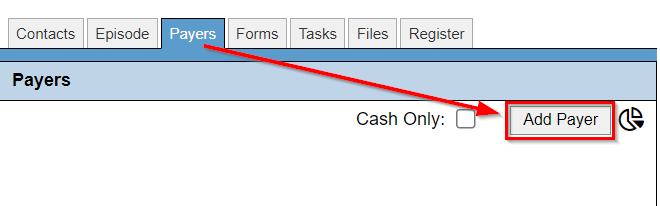
- Edit Contact Records: allows a user to interact with the "Add Payer" button in the clients' "Payers" tab.
Settings Permissions
- Manage Ledger: allows a user to add and manage categories, modifiers, and item codes in the "Ledger" tab in settings.
- Manage Payers: allows a user to manage and add payer information in the "Payers" tab in settings.
Billing Permissions
- Claims: allow users to create/edit/view and/or release claims based on your business rules and workflow.
Clinical and Assessments Permissions
- View: allow users to view clinical documentation as needed for your business rules and workflow.
Provider NPI
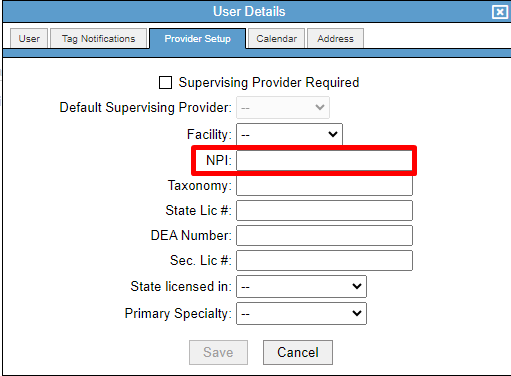
Providers who perform billable services will need their "NPI" entered into the "Provider Setup" tab within their user account.
If you have clinical staff that require a supervising provider, review the Users Provider Setup tab.
Payers
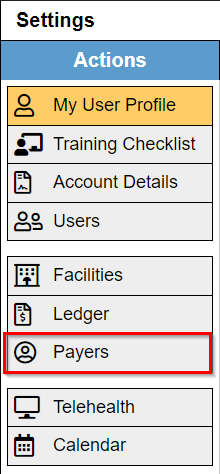
- Add your list of payers to BestNotes by selecting "Payers" from the "Settings" menu.
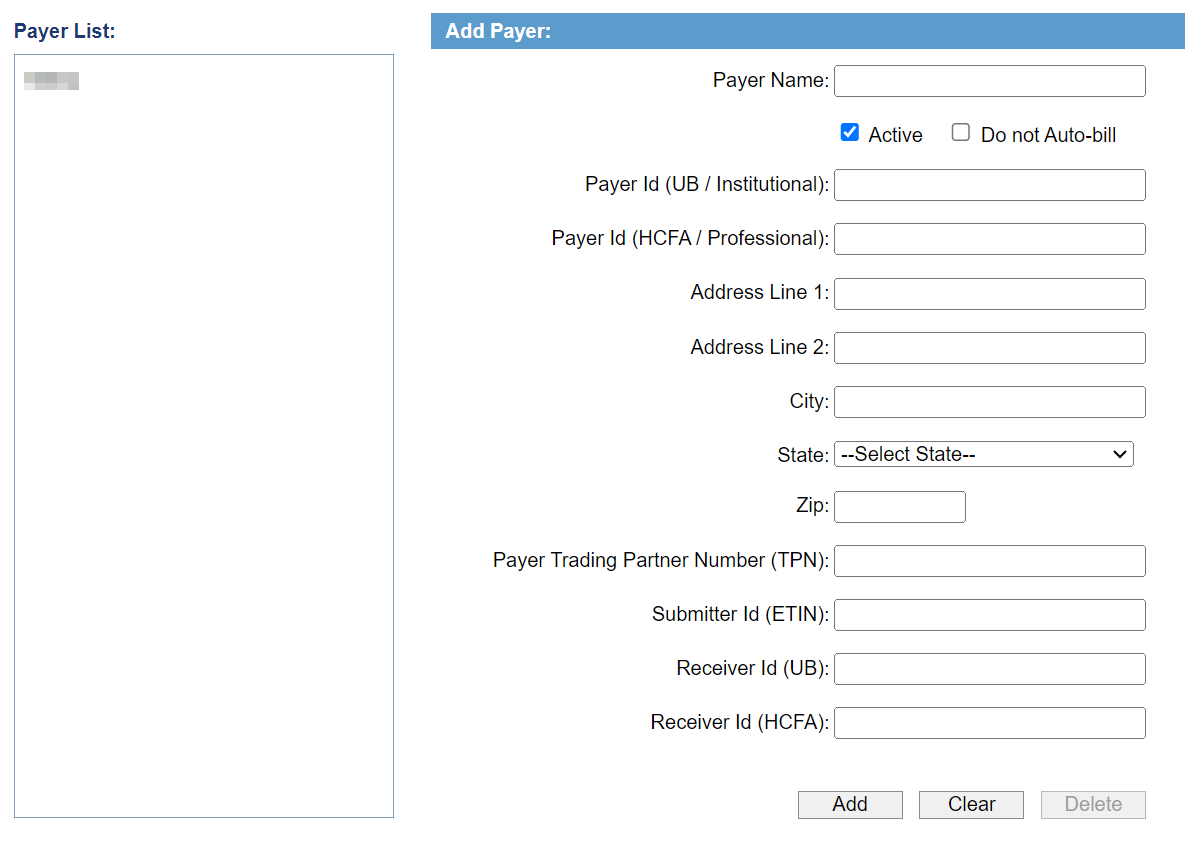
- To edit an existing payer, select the name on the left-hand side, make your changes and select "Save." Selecting "Clear" will not delete an existing payer, but will clear the fields to prepare a new payer entry. To inactivate a payer, unselect the "Active" checkbox; to reactivate a payer, select the "Active" checkbox. "Clear" will not delete existing Payer information, and inactive Payers will NOT affect changes to authorizations.
Important Information
- Payer information could change from time to time and disrupt claims, so update when necessary.
- It is best practice to have BOTH UB and HCFA Payer Ids (they usually are the same if your company only uses one; if so, copy the number to the Id field that you are not using).
- You can add companies that are not insurance-based to send invoices to. These companies will still need a number in either the UB or HCFA boxes; it is recommended to use a PO or contract number if one exists.
Definitions
- Payer Id: A unique code that identifies an insurance company or Medicaid program, serving as a digital address to route electronic insurance claims correctly.
- Payer Trading Partner Number (TPN): A unique identification code assigned to a billing entity, clearinghouse, or provider. It authorizes and authenticates an organization to exchange electronic transactions (like claims and payments) directly with an insurance company or government health program.
- Submitter Id (ETIN): A routing number that the clearinghouse uses to deliver claims to the payer.
- Receiver Id: A unique identification number used in EDI (Electronic Data Interchange) transmissions. It tells the clearinghouse or insurance payer exactly where the digital claim needs to be routed for processing.
Ledger Settings
- Add or manage ledger information by selecting "Ledger" from the "Settings" menu.
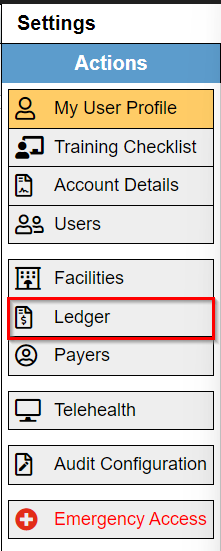
- To send a claim successfully, you are required to have your procedure codes set up in your ledger.
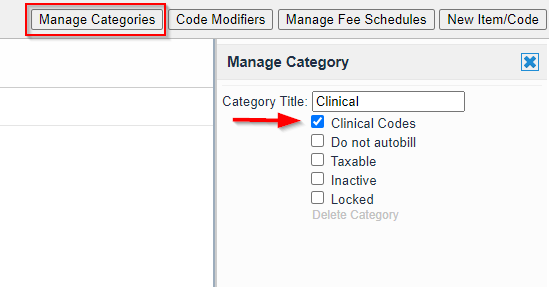
- You must check the "Clinical Codes" box for each category that contains ledger codes you plan to electronically release.
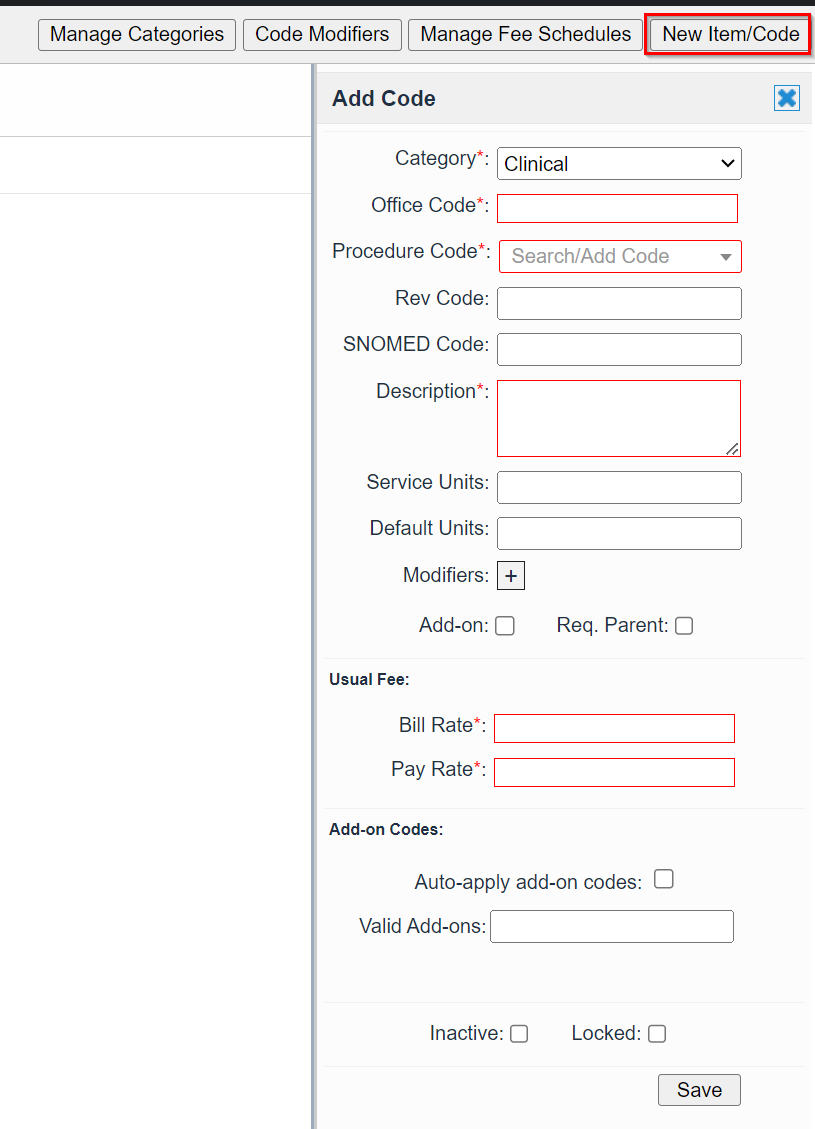
- Category, Office Code, Procedure code, Description, Bill Rate, and Pay Rate are required when creating a ledger code, and are entered when creating a "New Item/Code."
For additional instructions about setting up your ledger, refer to Manage ledger and setup.